
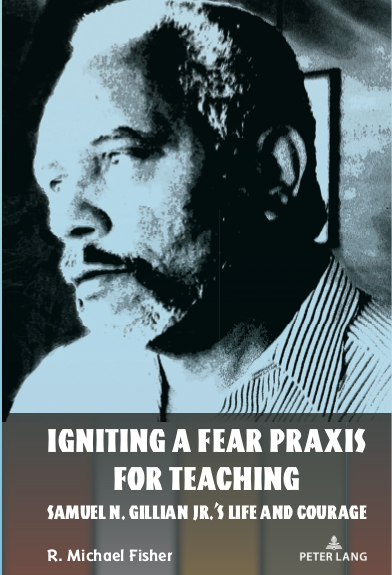
With current surging polarities of perspectives, dangerous culture wars and immanent threats to the human social and ecological fabric, it is a good time to rediscover the true meaning of fear through the eyes of a creative and endearingly outrageous educator who taught ‘Fear is not the enemy.’ Through a combination of fiction and non-fiction, this book offers a first documentation of the philosophy and story of Samuel Nathan Gillian Jr. (1939-2006), an African-American educator-activist from the Bronx, New York.

This book embarks on a unique transdisciplinary understanding of The Fear Problematique and how it can be integrated as a pivotal contextual reference for assessing the ‘best’ way to go in Education today and tomorrow. Educational philosophy is examined and shown to have largely ‘missed the boat’ in terms of responding critically and ethically to the insidious demand of having to truly educate ourselves when we are so scared stiff. Such a state of growing chronic fear, of morphing types of fear, and a culture of fear, ought to be central in shaping a philosophy of fear(ism) for education.

The book is a thorough case study of Williamson’s speeches, writings, and interviews. It documents and analyzes the thoughts and feelings of her supporters and critics based on what they have written, performed, and published. It records history while it is being made. The author offers support and criticism of how Williamson’s leadership and her team could have done things different so as to be more successful in the presidential campaign.

This book is the first short summary of the main concepts, the history, and the importance of the new field of Philosophy of Fearism. This serves as a primer introductory study book for those interested in the nature and role of fear from the alternative critical lens of the fearist thinkers (e.g., Desh Subba, Samuel N. Gillian, and others). The book contains an easy to read differentiation of fearism from merely studying fear. This transdisciplinary approach advances the world’s thought on fear management/education for the 21st century.
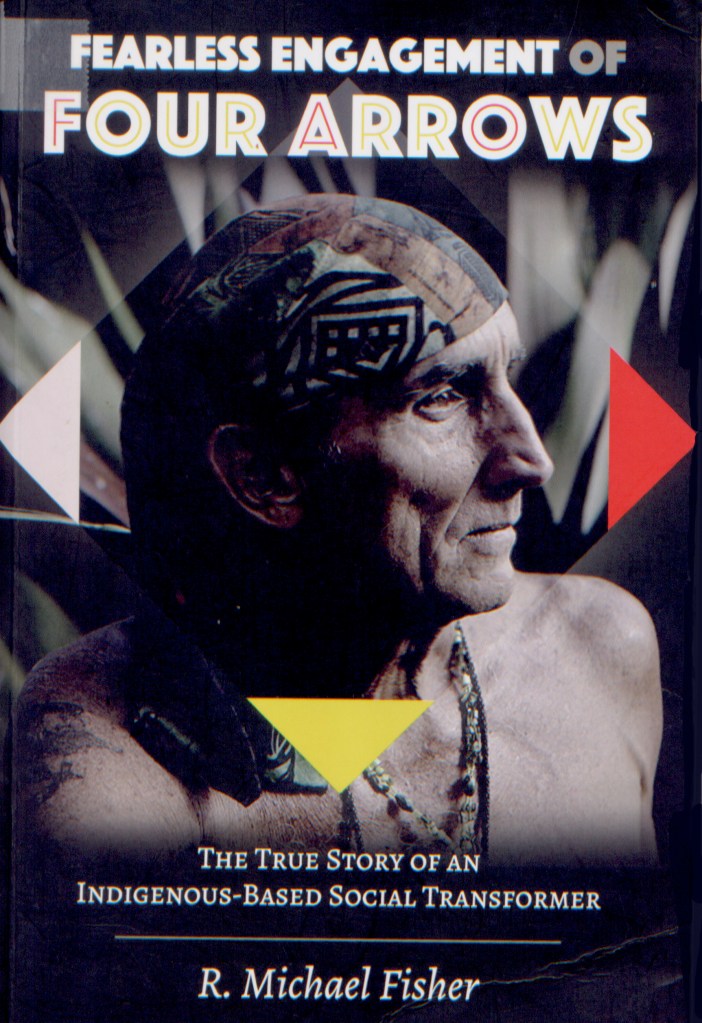
Utilizing the form of an intellectual biography of Four Arrows and his daring activist life and true teaching stories, the author creates a powerful adventure into the firey philosophy, activism, and emancipatory inspirations of one of the world’s great visionary prophetic educators and social transformers. Through a number of unique experi-ences, including firefighting, white-water kayaking, wild horse training, world-class athletic competitions, and counter-cultural activism, Four Arrows has be-come a connoisseur of fear and courage. This book shows how he walks a univer- sal ethical path of Fearlessness at a time when too many remain trapped by their fears.
This book addresses the human fear problem by summarizing the teachings on fearlessness from around the world and throughout history and utilizing critical integral theory to categorize the developmental and evolutionary spectrum of fear management systems. An educational healing vision is offered to address challenges of a dangerous 21st century.
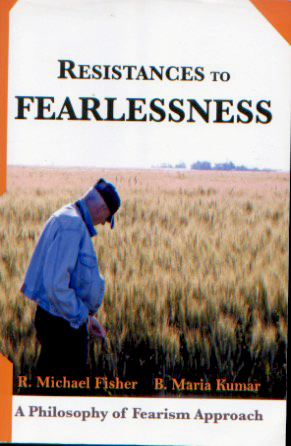
The authors, from diverse backgrounds, point to the resistances that work against the recognition and development of the natural ‘gift’ of fearlessness and the design of a Fearlessness Paradigm, both which can counter the abuses of the Fear Paradigm. With extensive research and philosophical thought, the authors dialogue in a fresh imaginative way to help readers and leaders in all walks of life to better understand what resistances they may have to escaping from what Fisher calls the ‘Fear’ Matrix.
No other philosophy, not rationalism, existentialism or pragmatism etc., has given this focus to fear as does the philosophy of fearism. It is an original synthesis of an Eastern philosophy of fearism (developed by Desh Subba, from Nepal) and a Western philosophy of fearlessness (developmed by R. Michael Fisher). The book brings forth their unified vision of a Fearless Age that awaits humanity if we better learn how to manage fear and teach about it with a new lens. Subba calls this a fearist lens, and Fisher calls it a fearlessness lens.

The authors, with their backgrounds in the study of the philosophy of fearism (a la Subba), bring a new lens to law and criminology to social policies, politics, and policing and how best to improve enforcement of safety, security, and moral order. The fearist perspective of a philosophy of fearism creates an exciting, challenging, and sometimes radical position, whereby the authors argue that fear itself requires a concerted focus for analysis and solutions—that is, if law and criminology are to fully meet the highest standards of serving justice for all in a globalizing complicated world.
This book brings a trifold synthesis of how the nature and role of fear is critical to the shaping and destiny of India. Not enough development theories or thinking have invoked “fear” as a major construct to analyze, as a new way to interpret culture, religion, policies, plans and governance overall across the world. India seems the perfect location to start a new critical and creative consciousness that sets goals that the three authors believe are essential for India to make progress into the twenty-first century.
Coauthors, B. Maria Kumar (India) and R. Michael Fisher (Canada) have always wanted to learn more about and focus on the motivational essence of human existence from different perspectives. Although many approaches and answers which the giants of various disciplines had previously put forth were enlight- ening, Kumar and Fisher felt that there could still be a creative new branch of thought –a variant existential philo- sophical model, which would perhaps throw fresh light from a different angle. Fear-fearlessness turned up in their enquiries…. Because, the element of fear-fearlessness is like the elephant in the room.
 Studio M*